Can the Design of a Paper Airplane Make It Fly Farther
Unsure virtually a new pattern? Scientists and engineers frequently start with a model. With a model, you can exam new ideas on a pocket-sized-scale before going bigger. They are too cheaper, easier to produce, and often betrayal whatever design flaws.
For us at home, the newspaper airplane continues to serve equally a popular model to explore physics, aerodynamics, and engineering. Discover what makes a paper airplane fly longer, farther, and higher with this blueprint challenge—all you lot demand is a piece of paper!
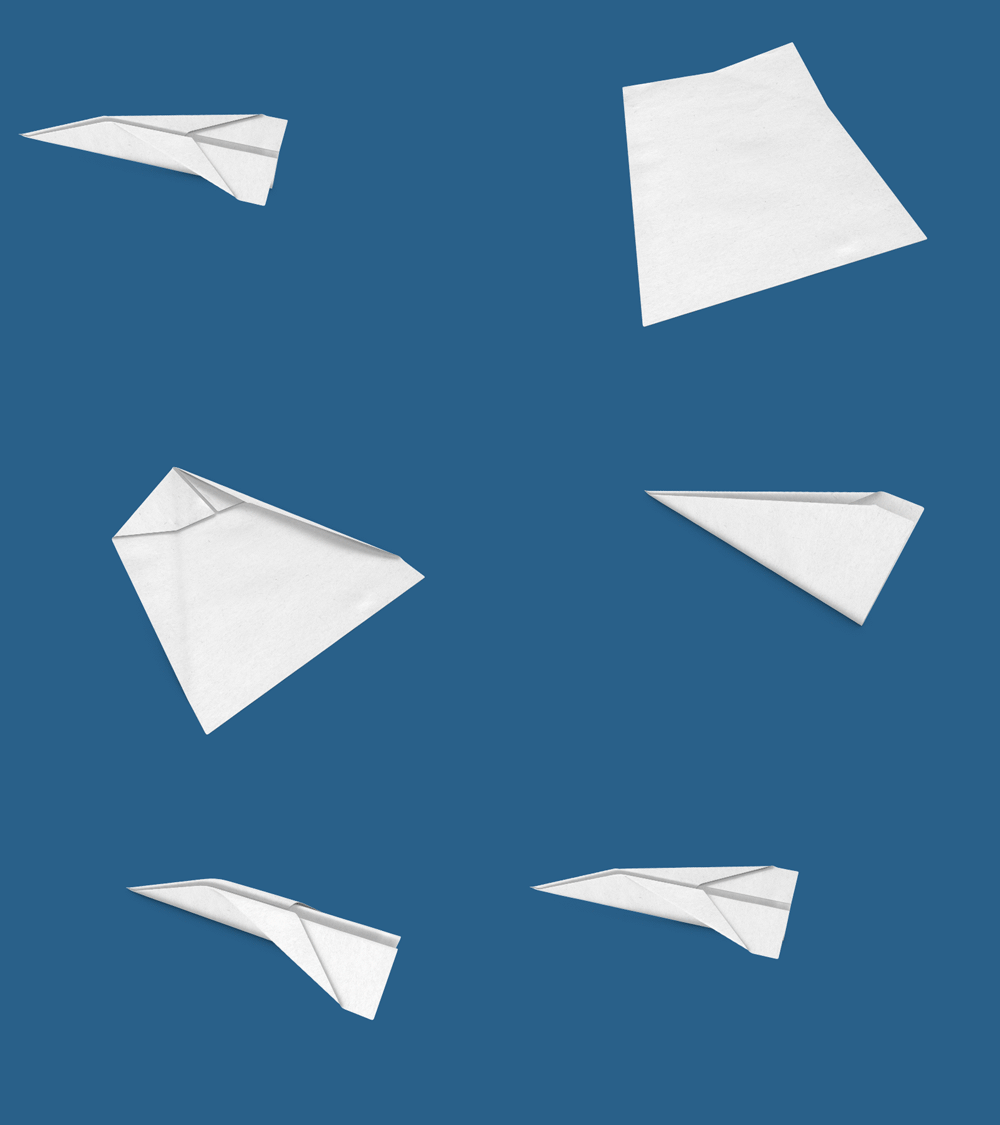
Assemble Materials
- Recycled newspaper (endeavour to get a bunch of different types)
- Record
- Ruler
- Paper Airplane Information Collection Worksheet
Before nosotros starting time building, we need to prepare to test all of our designs. Find a infinite in your home where paper airplanes tin can fly safely. Grab a ruler and use tape to marking every 12 inches along the floor. Apply the Paper Aeroplane Data Collection Worksheet to record the distance of multiple aeroplane flights.
Build A Base Design
Using recycled materials from around your domicile, fold a "bones dart" paper airplane.
How far does your bones dart airplane wing? Do you lot have ideas for how to make your plane fly farther?
Test Out Some Variations
Similar all planes, newspaper airplanes experience four forces: gravity, thrust, lift, and elevate. Simple changes, like wing size, body weight, and throw ability can significantly alter the forces your airplane experiences.
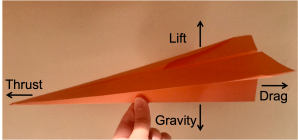
Get creative and arrange various aspects of your airplane. Here are a few ideas to get yous started:
#1: Increase Lift
As the plane travels, air moves apace over the height of the wings. This creates lower pressure over the wings, allowing the high pressure nether the wings to lift the plane upwards. Try making wider wings or wings that bend up or down at the ends.
#two: Limit Drag
Air molecules push against the forepart of the plane as it travels, slowing it downward. Make sure your plane's nose is pointed and the torso is lightweight.
#three: Alter The Thrust
When yous throw your airplane, you provide thrust, which pushes the plan forward through the air. This forrad motility causes air molecules to travel over the pinnacle and bottom of the wings. Does the strength or the angle at which you throw your plan accept an impact?
#four: Endeavour A New Fabric
The weight of the plane can pull information technology downward. How does a heavier or lighter newspaper change your plane?
Pattern Your Ain Airplane
Put your design skills to the test with a paper airplane flying challenge! After creating so many test planes, you should have a expert idea of what goes into making a newspaper plane that can travel long distances.
The Challenge
Gather members of your household and come across who tin produce the model aeroplane that flies farthest. Remember to consider the forces your plane will feel when designing your plane.
Reflection Questions
1. Are at that place other ways to define paper plane success besides distance?
2. What changes did you make to your original plane design?
3. How did members of your household design their planes differently?
4. What was nigh surprising to you about your plane tests?
What's The Science?
All airplanes, whether in your house or 35,000 feet in the heaven, fly because the forces that push button and pull them are balanced. It may sound uncomplicated, but many of import design choices contribute to successfully keeping a plane in the air.
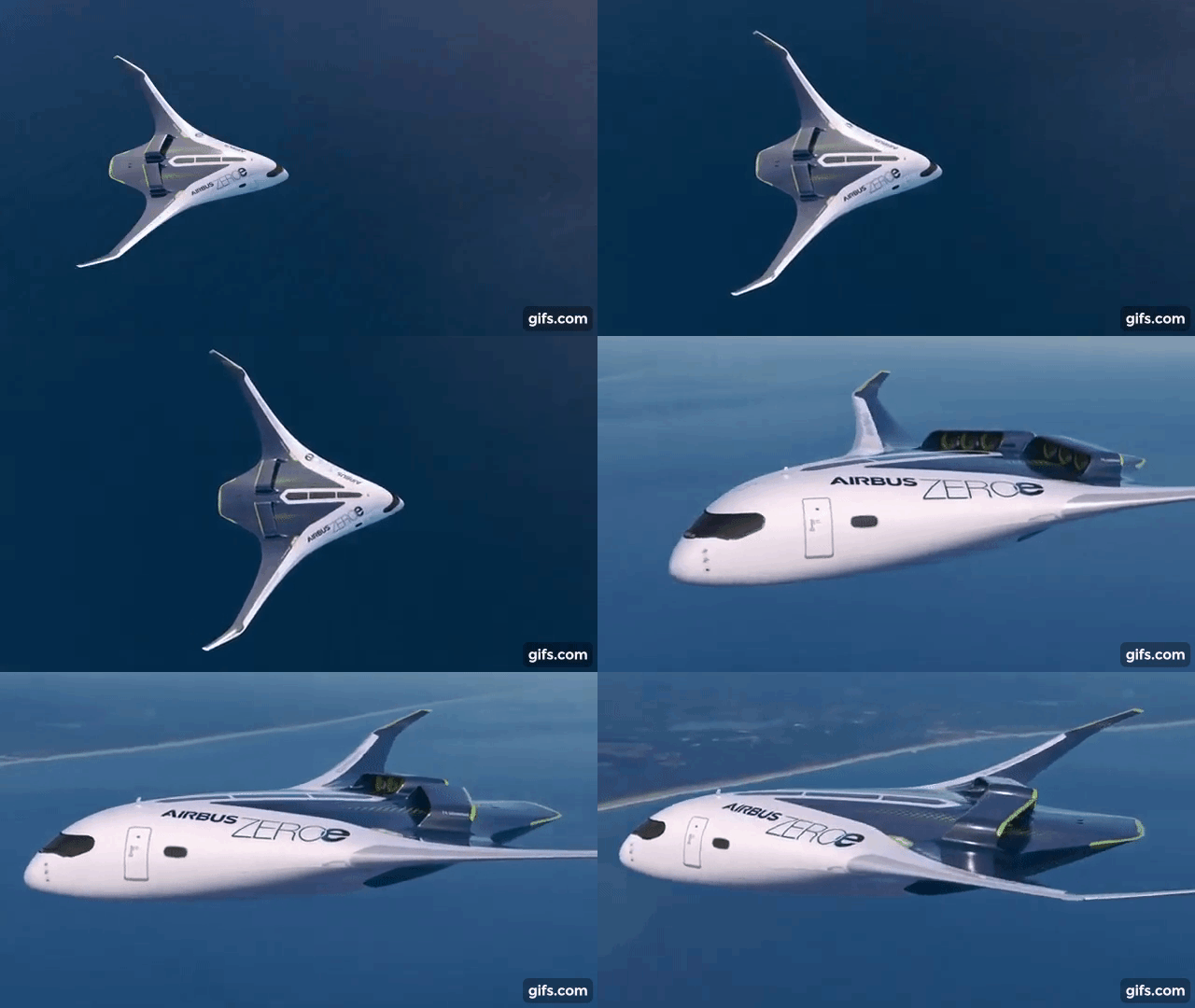
Fifty-fifty though more a century has passed since humans achieved powered flight, new aeroplane designs are still emerging. Researchers are peculiarly interested in ways to make planes more than environmentally friendly. Over the years, NASA has adult and tested new plane technologies, including ways to reduce fuel consumption and noise pollution. Recently, Airbus revealed a new airplane blueprint that promises to release zero emissions into the atmosphere.
Related Links
Excited to larn more about the aerodynamics backside paper planes? Start with some advice from the earth record holder for longest newspaper airplane flight: Aerodynamics Explained by World Record Paper Airplane Designer
Looking to get an experienced plane folder? Check out Fold North' Fly for basic and expert-level tutorials.
Written by Jennifer Powers
Cover illustration by Carrie Lapolla
Editing by Xochitl Garcia and Ariel Zych
Digital Product past Ariel Zych
See the Writer

Nearly Jennifer Powers
Jennifer Powers is a science educator at the Oregon Museum of Science and Manufacture in Portland, where she makes science fun for everyone through strategically designed exhibits and hands-on activities. She has available's degrees in phytology and Spanish from Washington State University and a main's caste in establish ecology from the University of Wyoming.
Source: https://www.sciencefriday.com/educational-resources/paper-airplane-flight-challenge/
0 Response to "Can the Design of a Paper Airplane Make It Fly Farther"
Post a Comment